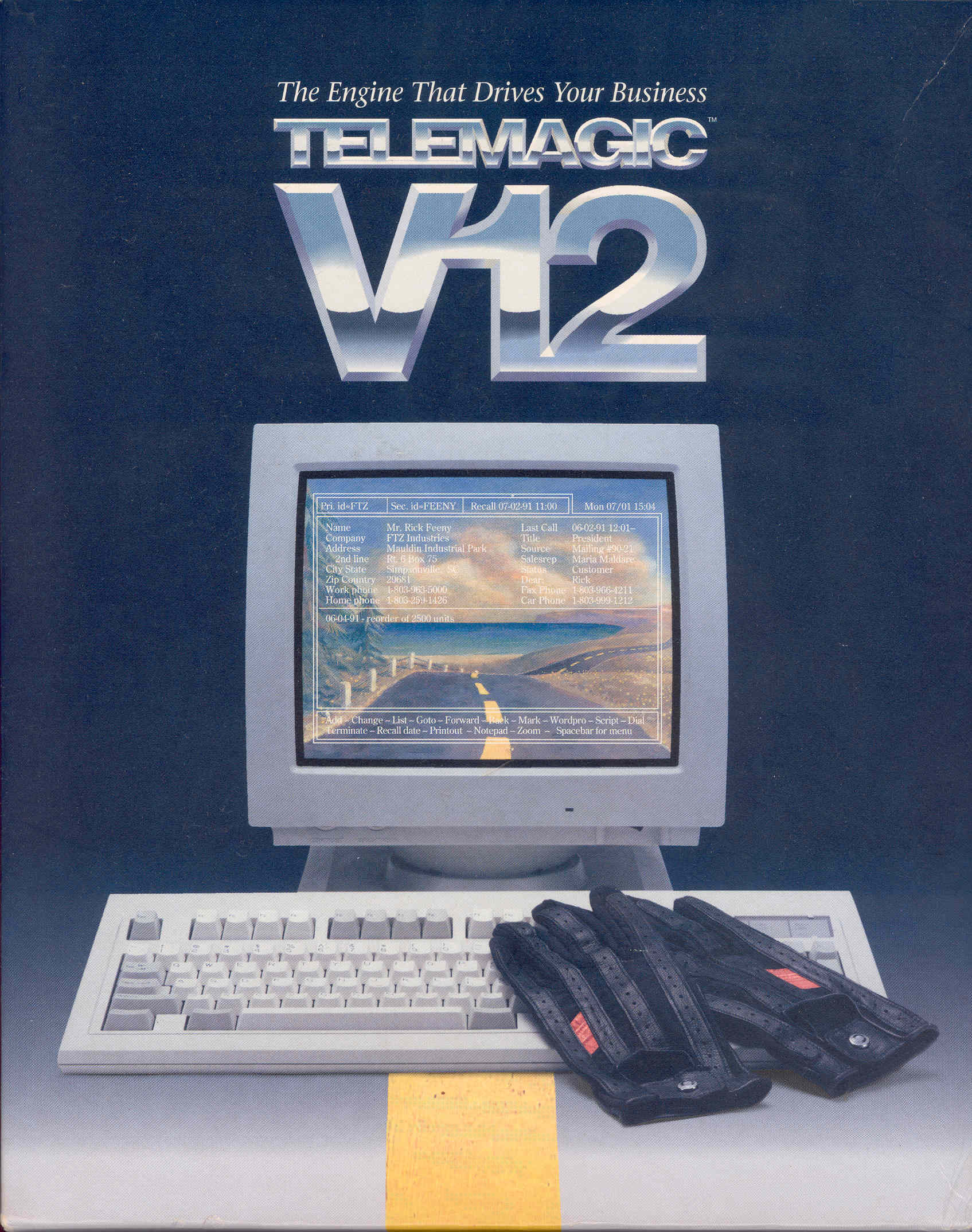
TeleMagic: "Software for Success in Business"
Adventures in Business
The true story by Michael McCafferty
I am a serial entrepreneur.
I like to build successful businesses out of nothing.
It has been that way for a long time...
First experiments
There is a vague memory of my first business adventure being a lemonade stand, out in front of the house.
Next came the Lynnwood Cycle Shop, a bicycle repair service for the kids in the neighborhood. I worked with my brother Bud in that business. I enjoyed making things work, but I really liked getting paid for it. It became clear to me early on that there is really no limit to your success if you are in your own business. I was hooked.
Being a newspaper delivery boy was great work, and taught me the importance of excellent customer service (keep the paper out of the bushes!). It also built a strong right arm that would help with Frisbee and biplane flying later on, and helped with the fundamentals of accounting and cash management.
When I was old enough, I set pins at the local bowling alley. Yes, in a time long, long ago, actual human beings would reset the pins after bowlers knocked them down. It looked a lot more dangerous than it was, but sometimes you would get hit with a flying pin. It hurts! Although we would get paid an hourly rate, the real money was in tips. If you knew what you were doing, you could kick a pin just as the ball would hit, and increase a player's score significantly. If they scored big, they tipped big. It was, once again, customer satisfaction as the key to success.
Same thing with caddying at the local golf course. For me, this was tough work. I was not built to carry two monster golf bags around, but I did it because I needed the money. The more you worked, the more money you made. The more you took care of your customers, the more money you made.
I evolved away from dangerous work, and physical labor, and became a "soda jerk" at the ice cream fountain at the local drug store. It was easy to see that putting in a little extra ice cream in a root beer float would normally bring an extra dime tip. The owner of the store didn't agree with my economics, as it was his ice cream, and I was getting the tip. But it was a great job because I got to read all of the hot rod magazines and comic books. And be the center of attention when the girls dropped in. It may have been my first understanding of "fringe benefits"!
Once the car bug hit me, I worked in a gas station, pumping gas, cleaning windshields, fixing flat tires... The station owner wanted me to check the oil on every car that came in. He figured that if I really pressed the people to check the oil, then when the hood was open we would have an opportunity to sell more stuff. That really excited me, and soon I was setting new records for selling more stuff than anyone else. I got good at selling windshield wipers, tires, batteries, fan belts, hoses, additives, you name it! Unfortunately, the owner wouldn't pay me a commission on all that stuff, but I could still see the principle at work.
An institution is the lengthened shadow of one man.
Emerson
College Capers
During the '50s and '60s, all young men were required to serve their country in the military. There were few choices involved. Either you were drafted into the Army, or you could enlist in some other branch of the military such as the Air Force, Navy, Marines, etc. The law was written that all men at the age of 18 must register with the Selective Service System.
There were only three ways to avoid "The Draft" as it was called.
1. If you were "unfit" for military service, they would give you an exemption. This means you have some physical and/or mental condition that makes you undesirable. I was fit, and was not about to shoot myself in the foot (literally!) to avoid the military, so that left two other options.
2. If you went on to college, you could get a deferment of your military obligations until after you graduated from college. I had just completed 12 years of institutional education (8 in elementary school plus 4 in high school), and I was looking for something a little more interesting than another 4 years in an institution, so that left me with the only remaining option:
3. Be Married.
Choosing the least of 3 Evils, I asked my girlfriend du jour to marry me. I had always been attracted to women with high intelligence and an delightful sense of humor, but I was a bit taken aback by the laughter that followed my earnest proposal.
The options were narrowing: for the next 4 years I would be either soldier or student.
I mentioned my decision to my father. "Where would you like to go to college?" he asked pleasantly, and with what I thought at the time was a benevolent smile.
This was not something I had spent a lot of time thinking about, but I knew where I didn't want to go. My older brother had just completed his first year at Notre Dame, so I preferred to find some place where I could stand on my own and not be cast in the role of "the little brother".
"Harvard? Oxford?" I said, completely innocently.
I haven't heard my father laugh so hard before or since, it was the high moment of his wonderful sense of humor. When he finally calmed down and regained his composure and reassumed his persona as Great Provider, he told me that he had heard of a place that might accept me. He knew that this would not be an easy thing. I was just barely graduating from high school. Academic excellence was not among the goals I pursued. Girls, cars, and "testing the System" were more to my liking. Therefore, without the proper academic credentials, it would be a real challenge to get into any decent college. But I had complete faith in my father's abilities.
He took on this great challenge knowing that to fail to get me into college would be to put me into the military. And that could mean getting shot at. This was now a life and death situation. It was a few days later that my father and I were sitting in the office of the President of Mt. St. Mary's College (now University), a small Catholic boys-only (now co-ed) institution located in the foothills of the Blue Ridge mountains of rural Maryland. I remember nothing of the conversation except one sentence uttered by my father: "Monsignor, I know Mt. St. Mary's doesn't need my son, but my son needs Mt. St. Mary's!" It was at that moment I knew my future as a student was assured.
The following four years were filled with the most unlikely misadventures, which I call Capers, and Webster defines as "capricious escapades".
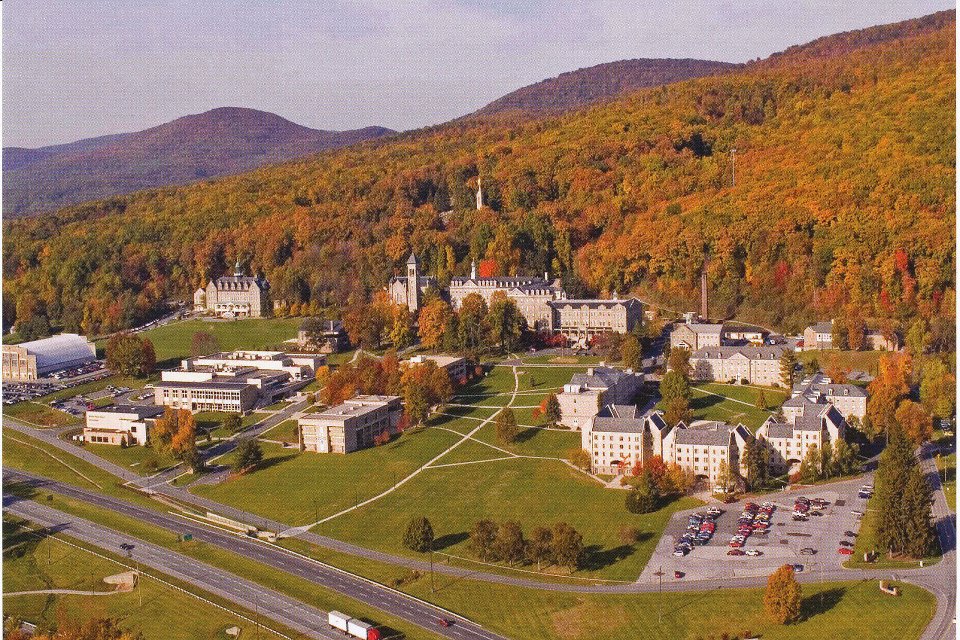
Mt. St. Mary's College, Emmitsburg, MD. Scene of many a caper!
The Blotter Caper
It was when I got to college that the entrepreneurial adventures really began. As a new freshman, living away from home for the first time, and off campus, I was truly on my own and my creative juices really bubbled up. My first money making adventure was to create a desk blotter, about 24"x36", for every student in school. On this blotter I sold advertising space to the local merchants, and distributed the blotters free to every student's desk. For the students it was a handy reference with phone numbers and addresses. For the merchants it was a great way to keep their ad in front of the students all the time. The merchants loved it and I sold out the spaces on the blotter very quickly. I remember the number $600 as my profit on the deal. It was a couple of weeks after this coup that the chairman of the yearbook advertising committee visited me, accusing me of using deceptive business practices in getting the ads, telling merchants that it was a school sponsored business. It wasn't true of course, he was just miffed because I had beaten his people to the merchants, and when they were hit twice in short succession for advertising, they all said "Hey, your man McCafferty was just here last week!" A minor misunderstanding, of course, but it would set the stage for further legends to follow.
The Birthday Cake Caper
After the great Blotter Caper, I branched out into interstate commerce, using direct mail. It occurred to me that there were about 700 students at school who would have birthdays while away from their families, and that I could sell birthday cakes to parents who would naturally want to do something special for their son so far away from home on his birthday. To do the direct mail piece, I bought writing paper and envelopes at the college bookstore, with the school name and logo, and had printed on the writing paper a standard presentation of the heart-rending case of their child being lonely on his birthday, and that there were 3 sizes of cakes available, with custom messages possible in the frosting. It went over very, very well, and I got to deliver and eat a lot of cake.
Trouble came a few months later, at a Homecoming weekend. I was in the Student Union building during an open meeting of parents and faculty, when I heard one of the parents ask one of the priests quite loudly: "Where is Father McCafferty? I want to meet him and thank him for making sure our son got a birthday cake!" Father McCafferty? How in God's name did somebody think I was a priest? It hit me like a ton of bricks: I had signed the letters "F. Michael McCafferty", with the "F." simply being the last vestige of my given name, as I transitioned over to the self-chosen "Michael". It was obvious, but wholly unintentional, that some parents thought they were buying from a religious person who abbreviated Father with F. Well, you can imagine how much trouble I got into for impersonating a priest, and for profit, the lowest most contemptible thing a young Catholic boy could do!
I was not starting my college days with great popularity, either with the students on the yearbook committee, or with the faculty. That may have been the reason for my loss in the race for Class Treasurer. I wasn't interested in being President, I wanted to be near the money! After that, I stayed out of politics and religion when it comes to business.
The Bookie Caper
My classes were all business oriented. Accounting, Economics, Business Law, etc, with a little bit of Fine Arts, Logic, Cosmology and fun stuff thrown in. It helped in my business pursuits in later life, but my school days business adventures were much more real world.
One day I noticed that there was a group of students who frequented the horse races at Shenandoah Downs. It was a relatively long drive, took up a whole day, and they invariably lost money. I seized the opportunity by offering them track odds, and they could save their gas money and time. Thus began my days as a bookie, and it would have lasted for a lot longer if they had at least won something, but these students were incredibly bad handicappers. Soon enough my customers went broke, and I learned that I didn't want to be in the gambling business.
The Purple Onion Caper
The Purple Onion (named after the original beatnik coffeehouse in San Francisco) was a caper that will long be remembered. There was a drugstore that went out of business, leaving a most intriguing empty store in a prime location in the center of town. It just screamed out to me to figure out something to do with it. It came to me that what this little college town needed more than anything was a nice, wholesome environment where I could meet girls! And that empty store was going to be the place. Of course, it couldn't be empty, it had to be a place that pretty girls would want to go to, and that meant entertainment and food, and guys. Since my school was guys-only, all I had to do was figure out the entertainment and food. This was my first lesson in "strategic alliances". We got all the refrigeration equipment, freezers, soda dispensing equipment, coolers, etc from the suppliers of the food and drinks, for no money up front, simply because we would be buying product from them. You just gotta love it! But this adventure needed some big bucks to get started, and I needed help with the labor, so I took on two partners, John McKee and Gabe Roscoe, and we each put up 50 bucks. And so for a total of $150 we started the Purple Onion, the hottest thing to hit that town in a long time.
We decorated the place in the theme of the "Beatnik" coffeehouses of the day, with burlap bags on the ceiling, and flat black walls, while the stage was painted our signature color of purple. Our big challenge was furniture. We needed tables and chairs, and the only low cost "resource" was an abandoned building on campus that originally housed the swimming pool. Over the years, the unused and drained pool was used to accumulate cast-off desks and chairs from the dorm rooms! Most of the stuff was really ugly and beat up, but it was perfect for our needs after a quick spray coat of flat black paint. It was going to be in a very dark environment, so pretty was not a requirement. We liberated all the furniture we needed in a late night visit. This "scavenging" mission was also one of my first validations of the premise "It is better to ask forgiveness than it is to ask permission." On opening night a couple of the faculty priests showed up to check us out, and one of them pulled me aside and remarked that the tables and chairs had a certain familiar quality about them! I was non-committal in my reply, but I was shaking in my boots, thinking that this would surely be the caper that would get me expelled and sent on to prison for the rest of my life. But nothing came of it; I think the priests were secretly very pleased with our spirit and resourcefulness. Opening night had lines down the block and around the corner. It was pretty girls as far as the eye could see!
And they loved it! Danny Reagan played the piano (a real "find" at a Gettysburg used furniture store), and John McKee and his Blue Ridge Singers provided great entertainment.
It wasn't long before we used our new base of operations to branch out into the food delivery business. This was eons before it caught on big in America. We started out by filling orders phoned in from the dorms, but soon we were making subs (hoagies) by the hundred, "on spec", and walking through the dorm hallways with the smell wafting through the air. It was virtually impossible to NOT have one. This was the last straw for the local merchants in the food/drink business. We were sucking up almost all of the disposable student cash, so they started playing hardball. They closed down our food delivery operation on the grounds that we did not have state approved food delivery vehicles (our vehicles were barely road worthy!). So that leveled the playing field, and gave me my first taste of hardball competition. Very educational.
From this experience I leaned that I didn't want to be in the food service and entertainment businesses.
Fast Mikie
In my last two years of college, whenever I needed a few extra bucks, I could usually get what I needed in the pool hall. At first, I played a lot simply to learn the game. It was 10 cents a game, but I looked at it as 10 cents a lesson. As I got better, it became a business, as there was always a lot of gambling on 9-ball and straight pool. In four years of college, I became quite good at the game and earned a fair income at it. Especially the first few weeks of my senior year. Over the previous summer I spent 6 straight weeks living inside Allinger's pool hall in downtown Philadelphia, playing with the old men who were great teachers. I would be there when the place opened in the morning and play until they closed late at night, eating junk food and Cokes out of the machines. When I got back to school my game had improved dramatically, but of course it would have been dumb of me to shoot at that new level without extracting all the odds (and cash) I could from my opponents. The key rationale is that they could have been practicing even more over the summer. So the hustling that they got only made up for the hustling I got when I first started playing. It's all part of the magical circle of Life and Commerce!
After being away from the game for 40 years, (family and work are incompatible with shooting serious pool) I got back into the game again. The big difference this time around is that I do not gamble. It's probably a result of my awareness of the Law of Karma. Click here to visit my pool blog.
Pinball machines were also a profit center for me, the ones that paid off in nickels, not free games. Here was an intellectual pursuit with eye-hand coordination challenges just waiting to be mastered. Pure physics in action! I got pretty darn good with those machines, but it took a long time to earn any real money.
Are you getting the impression that I didn't do a lot of studying? You would be right. I was learning the lessons of business more by doing, less from books.
The entrepreneur is essentially a visualizer and an actualizer...
He can visualize something, and when he visualizes it
he sees exactly how to make it happen.
Robert L. Schwartz

The Great IBM Caper
When it finally came time to graduate from college, there was this natural expectation that we would all get a "job". And that meant working for somebody else in a corporation, law firm, accounting practice, or some other large, structured conservative business endeavor. This kind of thinking had no appeal whatsoever. I wanted to work for myself. And I wanted to be where the money was. I've always been a rather independent thinker, and did my share of checking around and decided that the perfect "job" for me was as an insurance salesman. No limit on earnings, flexible hours, get paid commissions for the life of the customer for selling just once. Perfect. I interviewed and got offers from several companies. They just needed a pulse, but I was being very selective. I chose an insurance company operating out of Harrisburg, PA. My life was set.
And then Fate, literally, opened a door! I was walking down the hallway of the Student Union building, on my way to get lunch, not a care in the world, got a job, school is out in a couple of weeks, life is good. A door opens out into the hallway, surprisingly quickly, almost hitting me, and in a reflex of self defense, I grab the door handle to stop the swing. A fellow senior is attached to the other side of the door handle, looks up at me, grins, and asks "You next?". I told him, no, I was not next, but why the smirk, and what would happen if I was next. He explains that on the other side of that door was a gentleman from IBM who was looking to hire a salesman, and that IBM only takes people from the top 10 percent, and the joke being that I was far from being in the top 10 percent in academic standing. I was more likely in the lowest 2 percent (as it was to turn out, I was even lower than that). So here was this other senior getting a kick out of thinking I was going to waste my time by trying to get a job with IBM, but I was thinking that this guy from IBM was wasting his time by looking for a good salesman in the top ten percent.
And then I walked right up to the gray haired man (George Roper, Branch Manager, IBM, Hagerstown, MD) and told him he was wasting his time if he was going to be so narrow in his rules. I also mentioned that there were absolutely no good sales candidates in this graduating class in the top ten percent, and, only one really good sales rep in the whole school, and that particular fellow was definitely not in the top ten percent. Well, he digested that for a few seconds and came back with the perfect question: "Who is this really good sales rep?" And in reply, I simply said "Me!".
He must have had nothing better to do with his time, and instead of just throwing me out on my butt, he asked if I would mind taking a simple little written test. I could see he was interested, but my instincts had been honed to a keen edge and I told him that I was really on my way to get a sandwich, but that maybe I would stop by on the way back. You could tell he was getting frustrated, because he was powerless. I just stumbled in there by accident, so I had nothing to lose. It was a perfect selling situation, for me!
I went and got my sandwich, came back, took his little test that he graded instantly, smiled, and invited me to take a more serious test at the branch office in Hagerstown, just 30 miles down the road. Well, now this was a bit of an inconvenience for me, so I asked him a few questions about what this salesman job was all about, and when he got to talking money, he indicated some numbers that easily beat what I could make at selling insurance, and this IBM job came with a salary in addition to a commission, and no limit on commission. This was sounding pretty good, so I went the next day for the test, which they again graded instantly, smiled again, and started introducing me around to a lot of really nice people, as if I were really going to work there! I had the job!
It never really sank in until I mentioned it to a few of the guys at school, and to my parents. To the news that I got a job at IBM, people were struck dumb. It was the neatest reaction! Nobody could believe that a guy who so completely typified the anti-student would ever be selected to work for IBM. ("Does not compute")
For my parents who had put up with my shenanigans for so very long, the news that IBM wanted their son was the greatest thing that ever happened. All of a sudden I could do no wrong, I was validated as, evidently, a good kid, and therefore their work was well done. I was a hero.
To the other guys at school, it was the complete opposite. I was a guy who never studied, and cut tons of classes, and I made everyone else in the school feel superior because of my low academic standing. But all of a sudden, their world was turned upside down. The best company on the planet, IBM, had ignored all their hard work all these many years, had invalidated all they believed to be true, and selected the school's biggest screw-up, that McCafferty kid.
But there were still a few more hurdles to leap before any of this fantasy of a job at IBM would come to pass.
First of all, IBM wanted a transcript showing my academic records. This was not a good thing. I figured that although IBM knew that I was not in the top ten percent, and that was OK with them, that it may really mess things up if they found out that I was in the lowest two percent. I told them that I would make sure that the college sent them right out. And then I ignored it. When IBM asked again, after waiting a week, I told them there would probably be some understandable delays due to the high demand for this kind of information at this time of year. Blah, blah, blah... This happened a couple of times, then it was just dropped. I guess they figured they really didn't need it after they decided to keep me around.
And so it came to pass that I dodged another bullet!
The next challenge was much more formidable.
The Miracle of my Graduation from College
After final exam results were posted, which I passed (but just barely), I was informed that I would NOT be graduating with my class. Something to do with over cutting a class. I knew it was a technical foul, and they got me fair and square, but it shouldn't be so serious that it would keep me from the fulfillment of my 4 years of, um, work... ("being there" would be more accurate). Anyway, they should really be happy to see me go! I was a pain they endured for 4 years, they surely wanted to see me go. But no. They were adamant. Actually, it was just one man who was calling the shot. The Dean of Men. The Emperor, Father Fives. His word was Law. There was no appeal. I met with him privately and he left absolutely no doubt that I would not graduate, telling me to not even bother to show up for the graduation ceremony because my name will not be called, I will receive no document, and that is all there is to it. Period. Go away.
Of course, I was really bummed about this. I figured IBM would be totally turned off with me not having a college degree, and withdraw the offer. But worse was the humiliation and suffering it would cause my parents who were now riding the highest levels of emotion, telling their friends about their son who will be working for IBM, the greatest company in the world, and how proud they are that I finally did something good, and who worried for so long about my errant ways. I figure they lit many candles and said many prayers of thanks to St. Jude, the Patron Saint of The Impossible.
OK, so how did I deal with this graduation challenge? I ignored it. There were two weeks between the last day of school and Graduation Day, so I really didn't have to worry about it right away, after all I have 14 whole days of no work, no school, why should I fill them with humiliation and worry? That got me through the first 13 days ok, but that last day was stressful. I realized at last that on the very next morning my parents would load the car with me and high expectations for the moment they have looked forward to for 4 years, drive 3 hours to school, and then what? Hear me tell them THEN that I knew all along that I wasn't going to graduate? No way. A man would have to be in love with pain to choose that path. There was only one choice left: I just MUST graduate. And that meant that I had to SELL the dreaded Dean of Men. I called him on the phone and told him I wanted come down there TODAY, right now, and talk with him about this graduation thing. He was direct. "You can come down here if you want, but you will not graduate." Ok, with me, one step at a time. I got in my car and drove 3 hours and walked into his office, sat down, and started talking.
I wish I could recall for you exactly what I said, because I'm sure it would be very educational. All I can tell you is that I talked and talked and didn't stop talking until I heard the words "OK, you can graduate." And then I stopped talking instantly, and probably groveled a Thank you, and escaped before he could change his mind.
This was a major selling experience for me. I would relearn the lesson from a very wise and street smart used car salesman Steve Hopkins. He said it this way: "You stop talkin', they start walkin'." Therefore, DO NOT stop talking. Under any circumstances. Until the sale is made. Period.
So I drive the 3 hours back home, getting in around 11 at night. I hear Mom calling to me as I'm going up the stairs to my room "Where have you been?" I told her: "Oh, just out with a few friends, having a beer, shooting some pool." I can remember her words to this day, the most beautiful and lyrical and happy words I had heard in my young life: "Well, get some sleep now, remember you graduate in the morning!". I slept very soundly that night.
IBM: The Path of True Enlightenment
On my first day on the job, the branch manager called me into is office and suggested that "We don't dress that way here", indicating that my attire, consisting of a Madras sport coat and penny loafers, was in need of some upgrading. On the second day they sent me out to watch a field engineer do some work, which involved a lot of wires and really scary electrical stuff. When I got back to the office I told the manager that I didn't like electrical stuff and that maybe I should just leave and go sell insurance.
He went into a big routine about how these machines are really safe, and how I wouldn't be working with the wires very much, and that I would really grow to enjoy it once I had gone to school to learn all about it. So now I'm really bummed. I just got out of school all my life, and this guy wants me to go back! But he calmed me down, I spent some more time with it, the salary was great, and I even enjoyed the school. A lot. In fact, it was downright addictive. I loved it. And my hunger for knowledge exploded like never before. I became a workaholic. I was consumed with it.
See the first letter I wrote home from IBM BDPT (Basic Data Processing Training) School:
And I sold a lot of computer systems. My job was in a New Account territory. That means that they have no idea what's out there, and they want me to identify prospects and sell them. It was part of the four states of PA, MD, VA, and WV. Their confidence in me was well rewarded. But better than all the money I earned there, I got something even more important, the education. IBM was known for the extraordinary training they gave their sales reps in the inner workings of businesses, down to the most minute detail. This would allow their sales reps to deal with the leaders of the biggest companies and be equal in confidence. IBM taught us not only how businesses work, but how to think about how they work. Very powerful stuff.
We were not only trained to understand computers, and how to program them, but also how they were designed and built! We were trained in physical site planning, construction, and installation, systems design, forms design, programming, operation, troubleshooting, and more. Then we were taught how to think like the managers and executives of the companies who would buy the computers: what motivated them first as human beings, then as managerial employees of an organization. And finally we were taught how to think like the very top people in the organization, the president/CEO, and the Board of Directors who represent the stockholders. We were given the secrets to how businesses work. And since businesses exist to make money, we were taught, by the best company on earth at the time, how to make money, and how to use computers to make even MORE money. And they are PAYING me a nice salary while they are revealing all these secrets! Is this like the luckiest thing that ever happened to me, or what? It made me so grateful that I worked extra hard to earn it.
There was a room in the branch office building called The Library, in reality just a bunch of file cabinets and bookcases, all packed with thousands and thousands of documents about all of the different computers, software products, application notes, success stories, technical analysis, theoretical papers, and on and on. Immediately, I started at the first drawer, inspecting every document cover to cover, replacing it and going to the next folder, then next drawer, the next file cabinet, and then started with the bookshelves, book by shelf by wall. That was Pass One. Pass Two took longer, because now I was being more selective about what I wanted to read. Forget the theoretical stuff, the stuff with a lot of mathematical jargon, forget the stuff with a lot of electrical diagrams. What I wanted were the documents that would help me sell low cost computers to the small and medium sized businesses in my area. Specifically I was interested in the applications that every business had a need for: accounting (my specialty in college... ok, I didn't really pay that much attention at school, but at least I remembered that the debits are by the window, and the credits are by the wall). Business needed to account for itself, its money. I wanted to learn all the different ways you could slice and dice the sales pitch for why you should be using computers in your business. I wanted to have EVERY bit of understanding I could get.
I knew right away that I was playing catch up. The people all around me were extraordinarily capable, intelligent, decisive, resourceful, energetic, positive, results-oriented, personable, and even good looking and very well groomed. I felt instantly like a sore thumb, a black sheep. It made me work even harder, to let no one ever doubt for a minute that I was earning my keep.
You couldn't change the fact, however, that I was still one of the more unusual specimens of the IBM experience. And there are many stories to illuminate this point, but I may be digressing.
I sold a lot of computers. It was almost easy. Even so, I still worked very hard, lots of hours, total focus on nights and weekends. Most commission checks sat uncashed because I didn't need the money after my rent and car were paid. I wasn't into living high in those days... I just got out of a dormitory, so just having my own apartment was like heaven!
The EDP Adventure
After 3 years with IBM, I knew I needed more control. My plan was to go into business for myself, using the education I got at IBM. Instead of selling one computer to one company, I would lease one computer and rent it for whatever I could get per hour. The key to this approach is to add value.
My challenge was that while I was excellent at selling computers, I needed to know more about programming them. This led to the conclusion that I should get a job as a programmer so that I could learn more about programming.
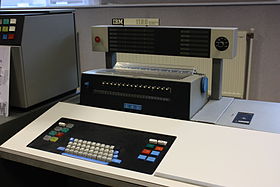
I applied to Technitrol, Inc. in Philadelphia and got a job as the solitary programmer on the IBM 1130 Computing System. The company president at the time was E. Stuart Eichert. He was at University of Pennsylvania at the same time they were inventing the first computer. Stu held the patent for rotating magnetic storage. Smart guy. I interviewed with Stu and we hit it off. I didn't have to write any code, or take a test, so it was a quick decision. I think he was impressed that I worked for IBM, and that was pretty much good enough for him. I said a few words of FORTRAN, a programming language used by engineers and scientists. A few words was all I knew. I surely never did any real programming in the language. In fact, I had never done any serious programming at all, in any language, but here I was getting a job as the only programmer in the company! I had to spend the next two weeks in Savannah Georgia on retreat with the 167 Airlift Wing of the West Virginia Air National Guard. I took the IBM manual on Fortran IV to Savannah, and learned how to program. Theoretically. I also took the manual for the computer. The first day on the job was interesting. They must have just told Louise just that morning that some guy was coming in to be her new boss, and that she wasn't going to be reporting directly to the president any more. She was feisty, and smart, and put me through many tests. It started right after she grumped "Hello" to me. I told her how I was looking forward to working as a team and that I was really going to need her help and experience, and then I asked her to turn on the machine. She comes right back and says "Turn it on yourself!". This caused me no end of discomfort because I didn't know where the power switch was for the computer, and I sure didn't want to admit that on my first day. I was supposed to be the genius! This was my first management challenge in the real world. Needless to say, Louise turned it on, and we got a lot of good work done together. And I learned programming by doing programming.
After about a year of programming, I was convinced I knew enough about programming to be able run a computer service bureau. Besides just programming for Technitrol for the last year, I was also gathering information about other local and national computer service companies. My lower right desk drawer was filled with great competitive information. I was loaded for bear, and ready to rock.
It was right at this time that one of those incredible coincidences again visited my life. Stu Eichert, president of Technitrol, came to me and said he would like me to do some preliminary research on some of the more well known computer services companies. He was thinking that Technitrol, an electronics device manufacturer, would benefit from expanding into services. I told him right away that there might be some conflict of interest on my part because I was going to quit soon and start my own service bureau. He suggested that maybe we could help each other and by that he meant that he could put up the money and I would do all the work, and for that I would get 20% of the deal. Sounded OK to me, and I made a presentation of my ideas to the Board of Directors at Technitrol. And so it came to pass that, at 26 years of age, I became the President of Eastern Data Processing (EDP), 8th and Chestnut Streets in Philadelphia, a subsidiary of Technitrol, then listed on the American Stock Exchange. This was HUGE for someone so young! And yet, it was a complete arms-length transaction. He just honored all the checks when they came for payment, and I made things happen. Meetings were almost non-existent with him... until about 6 months later.
The plan was that we would become a payroll service bureau, and kick the butt of our very big competitor Automatic Data Processing (ADP). I was supposed to hire some programmers and create the software and then hire the salesreps and start making money. That seemed a bit slow to me. I hired a salesman (Bob Foley) early and as I had learned at IBM "Any good salesman can keep an infinite number of programmers busy forever." Bob brought in all kinds of business but it wasn't payroll business. And the new business tied up the programmers to write the applications. Soon enough, I had the "big talk" with Stu. He reminded me of the plan, highlighted how I had made no progress on the plan, and lost money. This was not my finest hour. I told him I understood very well, and that if I were him I would unquestionably fire me. His reply was one of great wisdom. He suggested that I had just received a $400,000 education (the amount of the losses so far), and that he paid for it, and that if he fired me he would be throwing that education away. I was relieved and awed by his great wisdom. And I spent the next 6 years working my butt off to make it happen. And it did.
I designed the overall system, the forms and reports and then wrote a lot of the software in COBOL (COmmon Business Oriented Language), but I had help from a couple of good programmers too.
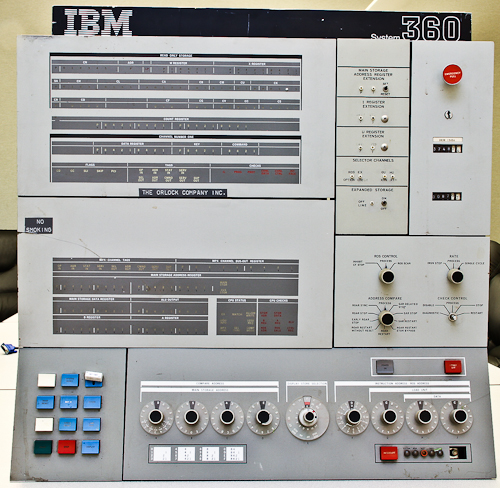
At first, we ran the payroll service on an IBM 360 Model 30 with 2311 Disk Drives and 2 Tape Units. Main memory was 64k. It had a most impressive front panel with hundreds of little lights that would flicker all the time and impress everyone who viewed it.
When Stu died, the board of directors claimed that they had no record of anything about me having any agreement with Stu or the company that says that I get 20% of Eastern Data Processing. This is after 7 years of total focus, and unbelievable hours. (It ultimately grew very nicely and was a 3-shift a day operation doing thousands of payrolls.) With this news, there was no future in staying at EDP, so I took a job in Chicago for Robert F. White and Company, located at State and Madison, the epicenter of The Loop. I was the VP of Operations. It was a natural move because Bob White, the owner of the company, had been aware of my progress and success in Philly for several years. He asked me what it would take for me to come to Chicago and do for his company what I had done for EDP. I told him, and he made it happen. One of the big things was that our agreement be in writing, so I learned my lesson from Philly. Bob White was the best boss a guy could have. Left me completely on my own to run a 3 shift, 7 day operation that was many times bigger than what I had built in Philly.
But I soon learned that Chicago was just too darn cold for me. It was in Chicago that I bought my first Ferrari, but the roads were awful most of the year due to the weather. That's when I realized that what was of most value was the output of my brain, and that my brain could work anywhere, so I should take it where my body feels good. And where the roads are fun to drive all year 'round. Ergo: San Diego.
I gave Bob a year's notice and finished up the conversion from punched cards to tape/disk payroll files, and then headed west to start a new life.
Selling Cars
When I first arrived in San Diego, with no job and no contacts, I started selling cars for a while, just for something different, not intended to be long term. I followed up on an ad at Tipton Oldsmobile and they hired me on the spot. On my way home, I realized it was a long commute, so I stopped by West Coast Imports, which was a lot closer to home and sold more interesting cars (Fiats, Saabs and Lancias). I told the manager at West Coast that I had just got a job at Tipton, was supposed to start Monday, but that I would prefer to work at West Coast. So they hired me on the spot. Jobs selling cars are easy to get.
I started selling a couple of days after Christmas, 1977. The first 4 days I sold zero. And then in my first full month on the job, I sold more cars than anyone had ever sold in a month at that store.
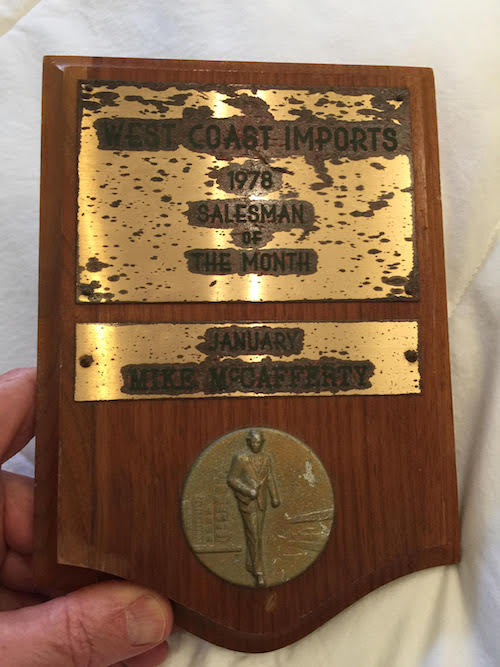
The reason for my success was partly my personal initiative, and partly the good natured competition with Steve Hopkins. Steve was the former best salesman in the place, and he kept pushing me all the way. We became great friends.
But I knew my best prospects were in the computer business, so when the opportunity arose, I quit selling cars and went for the "brass ring".
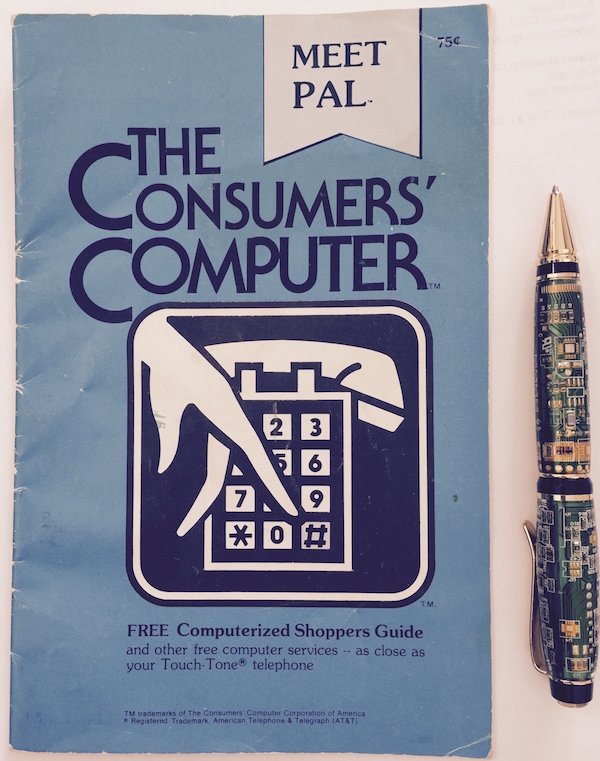
In a time long ago, before there was a World Wide Web, even before there were Personal Computers, "PAL" was the computer for Everyman. It was completely free to everyone, with unlimited round-the-clock access, simple to use, required no special hardware to buy, and the user's anonymity was assured. It was my vision of what the future would surely become, and I made it real. Fifteen years later, Google did it with search and AdWords. Here is the story of a wonderful adventure in innovation, whereby MM learns many expensive (but valuable) lessons in business.
The PAL Adventure
After a year of selling cars, I was looking for alternatives. That's when I got a call from a name out of the past. Dave Shefrin had been the owner/president of a software company in Hartford, CT who supplied the Accounts Receivable software for the services we offered on our computer at EDP. But the product didn't have a sales analysis subsystem, and that's what really sold services was all the neat sales reports you could get. So I wrote the sales software myself in a couple of days, making it a very generalized package that could do almost anything. All parameter driven, it was really a report generator, and it worked like a charm. I gave (as in no money) the software to Dave who then added it to his A/R package. It was a big hit with his customers. It didn't matter to me that I never saw a dime from it because I just wrote what was needed, and gave it to those who needed it. There was no intention to gain from it. It was this spirit that I feel was the Karma behind Dave's call to me that got the whole magical adventure going.
So now it's several years later, and Dave gets to wondering whatever happened to Michael McCafferty, and gets my number in San Diego from my previous employer in Chicago (never burn your bridges). He calls me, and asks if I've made my first million yet. I had to admit I was still quite a bit short of that goal. He announces that he has sold his software company and was looking to invest in something and was wondering if I would "invent something and he will back me and we would make a lot of money and have fun, 50/50, ok?"
So what did I have to lose, right? I'm selling Fiats! This was just treading water. However, since I had gone through this startup ordeal before, and if I was going to do it again, then I was determined to do it right this time. So I sat down with a clean sheet of paper, and made a list of all the things I wanted in an ideal business. The list looked something like this:
A creative, unique business that has never been done before, ever, anywhere.
No competition. A monopoly.
No receivables.
No physical inventory.
No employees. Run by computers.
No limits. Global, all people, all markets, round the clock.
Massively scalable. Rapid deployment.
Simple. Easy to use, easy to sell.
There were about 13 points on the paper after a lot of thought over many days. The only trouble was that I still had to invent the business to conform to these constraints. This took 3 months. The result was "PAL", the world's first completely free, round the clock, anonymous computer service, accessed over ordinary telephone lines, needing no computer for the user (only a Touch Tone telephone, PC's hadn't been invented yet). The application was a real-time replacement for the Yellow Pages, along with other free applications to gain traffic. It was, in fact, a precursor to Google and the World Wide Web that would come along more than 16 years later. Nothing like being a little ahead of the crowd...
The name PAL was an acronym for "Product & Area Locator" and a take-off on "HAL", the computer in the movie 2001: A Space Odyssey. Callers would be greeted with a computer voice: "Hello, this is PAL, how may I help you?" The caller would reply by touching the keys on the phone that would spell out the name of a product or service and then their zip code, and PAL would locate the closest listing, speak the database information (including special offers going on now) and even switch the call, free, if the caller wanted.
My potential investor Dave was overwhelmed. He thought maybe I would invent a software product (that would come later) and that the business model and target audience would be clearly defined and something he had experience with. This PAL stuff was completely beyond his comfort level. He wanted to have proof that such amazing things could be done with a computer. So I programmed the application on "GEnie", General Electric's timesharing service, probably the only online computer service that had a voice response system available for use on the network. When he saw an early prototype of PAL, he believed that it was technically feasible, but now he wanted proof that it could be sold. Would businesses really buy such a new fangled electronic Yellow Pages?
To demonstrate the answer, I put together a group of experienced telemarketers in a small office in Cardiff-by-the-Sea, California, and we wrote a script for a one-shot phone presentation aimed at getting Cash Now. The pitch was that we told the prospect that there were amazing developments happening with computers (never an argument) and that they would be a great help to business (no argument) and individuals (no argument) and a huge leap in computers for everyone was just made right here in San Diego and would be released in 3 months to everyone who lived or worked in San Diego. We told these prospects that they were among the first businesses in San Diego to be contacted to participate in this wonderful opportunity, and if they signed up now they would be able to take advantage of introductory special prices, AND they would also be able to reserve the best of a very limited number of ad spots that their competition would never be able to take over (as long as they kept paying the bills).
Put another way, we were telling them that this thing had never been done before, and that we were going to do it in three months, and that we wanted them to sign up Now and we would be out that same day to pick up their check! That was the outrageous part to me, picking up the check right away. But I deferred to the experience of our telemarketers. They wanted to get paid, and they were paid commission only, and only on collected funds. They were experts at getting the money now. It was a beautiful thing to behold.
What made all the difference was the real-time nature of this new advertising medium. It was possible for our employees to re-program PAL immediately to refer each new advertiser's information in the database. This completely binary situation, either you are in the database or you are not, coupled with the perception of the very limited number of ad spots (3). These conditions set a fire under the telemarketers, and their enthusiasm showed in their sales. Dave was convinced, and now all I had to do was make it happen.
So with the money we raised selling the ads in advance, I bought a Cromemco Z2-H running the CP/M operating system. Soon I converted to "CROMIX" the first Unix-based operating system for microcomputers. The machine had only 64k memory with a 10MB hard disk drive and 4 modems and a Votrax voice response unit, and programmed the main software in COBOL myself, and subcontracted a couple of machine language subroutines. What I was asking this little toy computer to do was way beyond its capabilities, but somehow I got it to work. And finally, the big day arrived when I had to let the world know that PAL was alive and well, and that the world would never again be the same.
This was a very big idea, and just before I pulled the trigger on the announcement, I got scared. I had no idea what the phone company would do when I announced it, but I knew they wouldn't like it. One of their big profit centers has always been the Yellow Pages. The phone company could easily squash my little business like a bug, or keep us tied up in court with injunctions until we gave up, or just cause a lot of line static, and interfere with the calls. There were plenty of ways they could cause problems, and it worried me a lot. And I struggled long and hard with the idea of actually notifying them of my idea before I went ahead, but I felt that was definitely the wrong way to go about it. They would study it forever before I got an answer, and the answer would probably be NO. This was one of those times when it would be "Better to Beg Forgiveness than to Ask Permission". The thing that got me to move ahead with confidence was one of my favorite quotes attributed to Goethe:
Whatever you can do, or dream you can, Begin it.
For Boldness has Genius, Power and Magic in it.
Begin it Now.
This was certainly a Dream, and it surely required Boldness, so when it was all ready to announce, I sat down and wrote up a Press Release, and slipped a few copies in the mail to the media. The first to bite was XETV, a San Diego run station transmitting from a tower in Tijuana, Mexico. They called me in to do an on-camera interview and it aired that same night. The rest, as they say, is history. The storyline was about this relatively young computer guy (me!) who invents this free public computer service you can use on your phone. And about how it will change everything. I was off on a huge roller-coaster ride, one of the biggest adventures of my life!
The next day the press was all over it, and the following day there were TV interviews on the rest of the stations in the area. Once the press got hold of it, it went out over the UPI news wire and was written up in newspapers throughout the US.
My parents called to say I had finally made it into their local paper (Philadelphia Inquirer). The fallout was even more interesting. The Discovery Channel wanted to learn more about how to use my new service as a way of doing interactive TV. They invited me to a think tank in Maryland to join with some other brains to think new thoughts on the convergence of TV and computers.
Everyone wanted to see the computer. But I wouldn't allow it. It had to remain a mystery. If they ever saw my butt-ugly stack of cheap hardware with tangled wires everywhere, they wouldn't believe their eyes. They would, every one of them, expect to see something much larger. They would expect that a machine that would handle the inquiries a million San Diegans to be a giant. If they saw it, it would be trivialized. Competitors could get greedy thoughts. It would be best if the computer stayed a mystery.
Soon enough it wasn't news anymore. We had to prove ourselves. Before we announced the service, it was easy to sell on speculation. After the service was turned on, then we became real and advertisers wanted real numbers so they could make intelligent decisions about the keywords and zip codes they should buy. It completely changed the dynamic of selling.
The nail in the coffin for PAL was my partner Dave. When he saw that he would have to invest real (serious) money, he bailed out. Abruptly. I was left with a brand new startup with a bad case of "Cashus Interruptus". I had to pay rent and payroll and suppliers... and what the heck was I going to do?
It was a long, slow, painful time for PAL. I moved him out of his office and into my spare bedroom, and only had one phone line, but he was alive to the world, and living to serve. Soon the vultures appeared. A guy from out of nowhere, Joe Labert, shows up and figures he can get the money needed to get going again. He brings in Jimmy Geiger. Joe and Jimmy sold motor homes together at La Mesa RV, a motorhome dealer. Jimmy knows a guy in Mexico with more money than God, and he can get us a shot at presenting the idea, but if this thing happens then it will be equal shares for Joe, Jimmy and me, and the other 51% for the guy from Mexico. That dropped me from 100% of the company to 16%, but I was shark bait, and there was no way I could resist.
When we showed up in Mexico City, and as we were ushered into an office, Max (the Money Man) came rushing by, and announced that his brother had just had a heart problem in Houston and Max was leaving on his jet to go there now, but that he had about 20 minutes to learn about this new business he had heard about. This was devastating! I was told that I would have meetings over 4 days to go into detail about this fantastic, global business that would soon change the world. Instead of 4 days, I had 20 minutes. I talked like a man possessed of his subject, passionate and knowledgeable, and as convincinly as one who had kissed the Blarney stone. At the end of 20 minutes, Max makes a move to get up, and I go in for the close immediately, extending my hand: "So, Max, partners?" He shook my hand and we had a deal. PAL would live again. But the adventure would become very strange indeed.
Max poured a ton of money into the business, and we learned a lot along the way. For example: when people can anonymously request anything they can think of, just by keying it in on their telephone, what would you expect would be the top two things they want? Did you say Food and Sex? Well, to be more specific, it is Pizza and Topless Bars. Can you imagine the kind of demographic information we could gather, by Zip Code? It was fantastic!
But even the best business idea the world has ever seen (am I being a bit un-humble here?) can still go horribly awry. A successful business needs a lot more than a great idea. And I learned that lesson the hard way...
Instead of going into some of the gory details of the devolution of PAL into nothingness, let's simply say that it devolved. From that same nothingness sprang the vision of what became, 15 years later, what we now call the internet, Google, Amazon, Facebook and more...
Bankrupt!
After PAL ended, there was a year of being stuck, wondering "why me?". I was living on my credit cards. Then the bill collectors started calling and that's when I realized that I had hit the wall. I filed for personal bankruptcy on St. Patrick's Day, March 17, 1983 and Started Over from scratch. It took a lot of energy to focus on coming back from total ruin. The only good thing is that there was nowhere to go but Up. Things had to get better, by definition.
How I did it is summarized in a couple of published books, the short story is that I started over with nothing, and over the next 10 years built a profitable business that was eventually bought out by a much larger company. This allowed me to live an interesting and comfortable life for the next 32 years (and counting...). It was the TeleMagic adventure that was my biggest and best in terms of speed of growth, profitability, and ultimate benefit to customers.
And finally, putting it all together,
The TeleMagic Adventure
The success of the TeleMagic software adventure produced the resources to own a magnificent open-cockpit biplane and allowed the time to learn to fly, and "go flying".
My inner entrepreneur thought it would be a good idea to set up a company to give biplane rides up and down the beach. My instructor did the rides until I got my license.
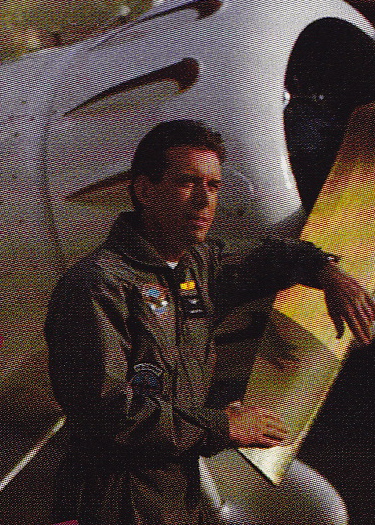

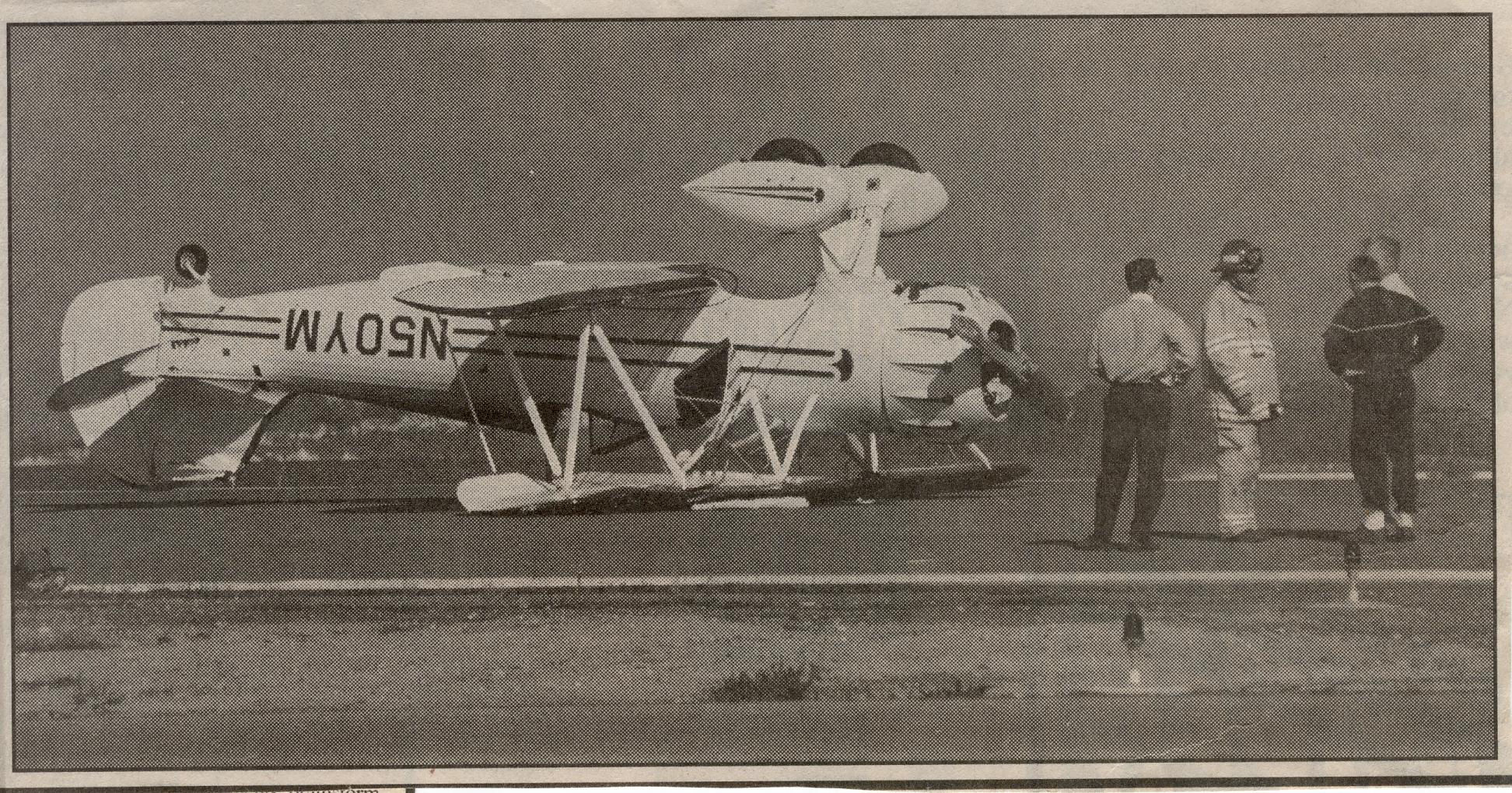
Air Mikie Biplane Rides was short-lived. The chief pilot landed with the parking brake on and the beautiful biplane was completely totalled. Luckily no customers were aboard, and he was unhurt.
I closed the business. The insurance payoff allowed me to get another biplane and I continued to fly, mostly solo, for another 6 years.
Click here to read the stories of my adventures flying an open-cockpit biplane.
That takes us up to The Landmark National Bank adventure, which ended on October 25, 2006 when I resigned as a Director.
And Now...
For the last several years I have been helping entrepreneurs as a mentor and/or on their boards of advisors.
As you might expect, I always have a couple of software products in "stealth mode".
But enough about my past experiences. Let's talk about your future experiences!
How may I help you in your business adventures? Check out my blog for entrepreneurs, startup founders, and CEOs: